Category: Salesforce

7 Methods Small Business Sales Teams Can Ensure Deal Closure

7 Methods Small Business Sales Teams Can Ensure Deal Closure
Is your small business sales group recently built, less tenured, or used to an alternate selling movement? You may find that their capacity to drive a deal to close is the same amount of a variable.

As of late, Salesforce Essentials Business Coach group in Atlanta held a “War Room” — a sales strategy to survey deals in play, comprehend where gaps in pipeline lie, or to separate a significant point — on the most proficient method for deal closure. After assessing various sales interactions connected with heading to a closure, we broke into teams to discuss any points, questions, or exclamations that could enable our group (to full straightforwardness, it got competitive and intelligent).

Here are the seven best methods we found out to guarantee closure. In case you’re a small business sales group searching for tips on the most proficient method to close your next deal, please make notes:

1. Prepare the stage for closure

Your prospect must feel like they fit into a settled process. By setting legitimate desires and clarifying what comes next for them, you can quickly develop integrity for yourself just as your organization.

Our language seems like: “We have a five-method procedure, and you are at stage two as of now! The initial step was connecting with us, and the second method is conversing with me. Next, we will assess your business needs and offer how the product can profit you, and you will get an opportunity to work through our free CRM trial. From that point forward, we will choose whether or not you need to push ahead, and on the off chance that you do, I will introduce you with our adoption and support group to guarantee you’re set up for progress.

2. Interact Boldly

Nothing boosts up maximized confidence to your pitch or demo than recommending that your prospect is already on their way to become your most valuable customer for life! Salespeople usually do not want to sound pushy and hence ignore their bold statements. If you want the customer to buy your products & services, just change your “if” language to “when” language. Change your communication habits of saying things like, “once you get started,” “once you sign the contract,” or “being a customer” vs. “if you decide you want to sign up.” This drastic change in your language shows a sudden confidence & belief in your product & your ability to showcase the prospect what they essentially require feeling mutually as confident as your client or maximizing their spending budget.

3. Enable Buy-in

Powerful discoveries and need analysis is the simplest methods to showcase your customer value entirely through your demo or pitch. Although if you do not utilize that information or make sure the client is using your value proposition, there is a very high chance of your client losing focus our attention, and your sales being a big flop.

Utilizing buy-in language will enable your group to keep the customer connected with and energetic about what they are proposing. For instance, say, “Do you see how this will assist you with keeping your inventory organized and avoid the irregularity you’ve seen with your current framework?”

Or “As we see this feature, what effect do you think it would have on your finance procedure?” You’re destined for success if you find an innovative solution. On the off chance that they don’t give you much, back up and state, “Not an issue, it seems like I am not nailing it, what parts of the service/solution do you generally feel trustworthy about.

4. Bargain in shorter amounts of time frame

Time is a very crucial aspect of cracking deals! This is known to salespeople as they focus on creating their follow-ups. The simplest method of creating shorter follow-ups is to bargain in a shorter amount of time frames.

In the future, while attending calls, rather than starting your conversation with “Allow me two weeks & then regroup.” Instead, say “Our clients usually take a day to decide whether a specific solution is an appropriate addition or not,

Majority of the time, customers will ask you for another 24-48 hours. If your prospect backs out, telling you that they require almost a week, just trying to know the reason behind it. This will help you in understanding their insights & decision-making plan. If you belong in high-velocity selling, give them the option of putting you on hold or calling you back to keep the flow of fast sales moving.

5. Utilize “if… then…” for discounts & perks

Cash flow may be a problem for your client and showing them, you are understanding to their situation will allow you to build integrity and trust in your company. Although, if your discovery around spending wasn’t the strongest, your group may fall into the vicious discount circle — providing profitable discounts and find themselves without any other steps to make if the client still says ‘not at the moment.

6. Let them know they’re ready

At times clients feel that their business is not established enough to starting using your solution at maximum pace. If you’ve been using the earlier steps by now, you’ve already made yourself a successful consultant. This helps in boosting your customer’s confidence in trusting you even more.

Always efficiently encourage your customers.
Here’s an example of how you can do it: “We’ve been talking for a few weeks, and I do believe you have a concrete understanding of how to best utilize the platform for your group. Let’s talk about further steps and making everything start. What are your thoughts?

7. Acquire the business!

If you’ve completed your job to ensure the client was following your points, & you got buy-in, it’s very difficult for them to say no. If they do, that’s alright as well — you can start digging to understand where you went astray and figure out a way to invite them back to the party again!

Initiating the stage to close starts from the very start of your communications with your clients. By following these methods, you can get your group that much closer to Closed Won status.


Author
Chinmay Bonde
Head of Content Marketing

As Head of Content Marketing at Cloudalyze, with an overall experience of 5+ years, I focus mainly on developing and editing my content, but I also have the opportunity to collaborate cross-departmentally to improve internal marketing processes, create marketing enablement strategies and weigh-in on our go to market strategy. I work & enable email marketing strategies via Salesforce PMC, and also take care of the social media pages of Cloudalyze. I also design marketing collateral’s for my social marketing strategies to increase the brand awareness for Cloudalyze.

5 Hacks To Create Large Organization Level Impact with SMB’s

5 Hacks To Create Large Organization Level Impact with SMB’s
Modern business purchasers need something beyond an outstanding product or administration: They request a superior customer experience. This is an astonishing open door for SMBs to win business from a lot of bigger organizations. Going up against large organizations with apparently unlimited finance plans and assets may appear to be overwhelming. However, an out-of-the-box innovation methodology empowers a small business company to create astounding customer experiences that large organizations can’t replicate.

A customer management software like CRM is the establishment for building purchasing and ownership encounters that set you apart. With the correct mechanization, you can grow fantastically customized customer experiences without a big group.

Here are 5 ways a CRM can help small businesses scale their impact without having to expand their teams:

1. Leverage marketing automation to create an amazing shopping experience

Marketing automation can help you provide outstanding customer experience by engaging customers with industry-specific content and offers, instead of spamming them with one-off emails and annoying marketing calls. Nurturing leads with quality content leads to providing qualified, sales-prepared prospects to sales reps. What’s more, that, thusly, drives more sales.

Put marketing automation, lead nurturing, and sales tasks on a similar platform so your entire group — marketing and sales — are in agreement. Common customer records, programmed lead scoring, and data analytics software let everybody see precisely what works and what doesn’t with regards to marketing efforts, sales strategies, and guaranteeing all pieces of your business progress in the direction of similar objectives.

2. Execute the accurate buying experience

Your games mentor was correct: Fail to plan, and you plan to fail. You should be purposeful about your group’s objectives and desires and format a sales strategy to get them there.

Grow clear sales playbooks to make a predictable purchasing process for all possibilities. Structure domains to keep numerous sales reps from reaching a similar organization, perhaps offering various products or opportunities to similar prospects. Set objectives to give your group substantial achievements to endeavor towards, and make a standard comprehension of objectives you anticipate that they should hit in a given month, quarter, or year.

3. Provide the sales team with the right tools for 5-star customer experience

Give your sales group the accurate tools to complete their activity, including providing an increasingly steady and effective purchasing process for customers. A CRM works as a single source of truth for your organization, making it simple for everybody to discover precisely what they have to work, and to remain in agreement in customer-facing circumstances.

Bring more information, similar to products and finance books, into your CRM and use it to computerize sales procedures, for example, making recommendations and statements. A good CRM platform can accelerate the whole purchasing procedure for customers, so they invest less energy sitting tight for suggestions and additional time working with you.

The more information in your CRM, the more you can use artificial intelligence (AI) to supercharge your business. Artificial intelligence lives on information, going through customer records, and crunching sales figures to surface insights that can assist settle on with bettering business choices. One incredible utilization of AI is to ensure your salespeople are offering the correct products to the right prospects. CRM-based AI tools are skilled at coordinating customer information to the product database and pipeline to assist reps with spotting pitch strategically, upsell, and new sales opportunities focused on specific prospects.

4. Increase Your Sales Efforts with Partners

Two heads are quite often superior to anything one, so consider increasing sales endeavors with partners. The correct organizations convey the advantages of a more significant sales group without the drawbacks of expanding headcount. The key is guaranteeing that all prospects have the equivalent astounding experience, regardless of whether they’re conversing with an in-house group or your partner’s sales reps.

Utilize a CRM to keep your partners on a similar page as your reps with regards to everything from sales playbooks to customer-facing resources. CRMs exceed expectations at being a single source of truth in an association, and it’s anything but difficult to stretch out that usefulness to partner groups. Track partners’ sales endeavors just as those of in-house reps in a similar spot, monitor which reps are supporting which prospects and guarantee that everybody is utilizing the modern adaptations of marketing security.

Tracking of real-time progress, CRMs exceed expectations at cutting and dicing the data to show how an organization performed after some time, and how it can be compared to past organizations. From recognizing campaigns and trends that paid off to putting the focus on partners or reps who didn’t pull their weight, a CRM is a perfect software for managing sales organizations.

5. Leverage automation to provide outstanding post-scale experience

As much as an innovation like CRM can do to help workers, probably the best advantage is how it provides always-on, customized customer service — in any event when you and your group are off the clock. Scaling service endeavors by putting resources into innovation rather than headcount can deliver enormous profits for private ventures specifically.

Two major plans to consider:

Put resources into strong self-service networks. The present customer is constantly associated with the computerized world, and as a rule, would prefer to determine their help issues than call an 800 number. Self-service networks put how-to content, product information, and question-and-answer pages at your customers’ fingertips, every minute of every day. Many CRMs include coordinated self-service networks that are anything but difficult to set up and keep up and tell your service agents when customers need a human touch to take care of their concerns.

Free up your operators with service bots. Service chatbots can help straddle the line between self-service and addressing a specialist, utilizing content talk to convey customized administration nonstop. Administration bots have shown signs of improvement — and a lot less expensive — since they were first presented and can scale as your business develops to help enormous product brochures and complex customer service needs.

What is a Sales Funnel & How is it Transforming in Today’s Time?

What is a Sales Funnel & How is it Transforming in Today’s Time?
The sales funnel illustration can often be taken in a different meaning, in reality, the procedure never goes easily. In the most recent decade, computerized marketing, Artificial Intelligence (AI), and CRM have radically changed the way toward changing over new leads into customers. It’s undeniably significant that business-to-business (B2B) sales and marketing groups are adjusted in their perspectives on a sales funnel procedure and lead gen in general.

This article responds to some regular inquiries, including:
  • How is the sales funnel characterized?
  • For what reason is the sales funnel still reliable?
  • How would you adjust sales and marketing in sales funnel stages?
  • How is the sales funnel evolving?
  • How would you oversee and streamline the sales funnel?
  • How would you align human abilities with informative insights all through the sales funnel?
Let’s see what an old-school sales funnel is?

A sales funnel symbolizes the entire way organizations trust purchasers take to become customers. Most organizations utilize the funnel idea as a technique to follow prospects as they travel through sales stages and to adjust marketing and sales targets, exercises, and procedures. (Some may likewise refer to this as a purchase funnel or transformation/conversion funnel.)

The sales funnel one of the essential ideas in sales and marketing. The highest point of the funnel implies the objective of each business — to create whatever number leads as possible – while the base reflects what number of those leads are changed over to customers before the finish of the sales procedure.

Phases of a sales funnel can fluctuate, yet a customary model pursues these stages:

  • Awareness
  • Interest
  • Desire
  • Activity

The customers’ attitude is hardly this basic or simple.

Why is a B2B sales funnel still crucial for business?

The sales funnel has been utilized by organizations to oversee inside sales stages for over 100 years. At the highest point of the funnel, possibilities may not be even near making a buy. They may be “qualified” because of the moves they’ve made —, for example, attending a webinar, going for a meeting, or downloading a digital book.

Customers progress down the funnel as they become aware of your products or services via connections with sales agents, or marketing and sales materials, and their advantage develops — until, finally, some convert and become customers.

Having a well-characterized sales funnel causes you to comprehend your customer’s knowledge on and desire for your products or services. That is the reason tracking customers through the funnel can decide how each must be interacted (utilizing what products or services they ought to be pitched or what content you should guide them towards) anytime.

Getting this planning right anticipates losing customers by burdening them with an excessive amount of data or giving them the hard sell too soon. This is the reason moving possibilities through the funnel is regularly called “nurturing.” Seventy-eight percent of business purchasers look for salespeople who go about as trustworthy advisors with information on their needs and industry. Customers must only possibly get the data and sales help they need when they need it.

A customer’s situation in the funnel can help design the sort and frequency of campaigns expected to start or keep up their advantage. It can likewise enable the sales to the group to organize leads or propose the most reasonable solutions to customers’ inquiries or concerns.

“Collaborating marketing and sales during the sales channel accomplishes something beyond collaborating the groups — it makes better business results,” said Mathew Sweezey, Principal of Marketing Insights at Salesforce. His position is approved by a SiriusDecisions study that discovered brands with firmly adjusted sales, and marketing tasks accomplish 24% quicker three-year profit development and 27% faster three-year profit development. The three most effortless methods to guarantee marketing and sales collaboration will succeed is a similar language, co-developed shared projects, and a strategy to maintain a policy level understanding.

In the beginning, a common language should be set up to guarantee marketing knows when a lead ought to be moved from marketing’s control, and set in the sales pipeline. There are two terms, “marketing-qualified lead” (MQL) and “sales-qualified lead” (SQL) or “sales-accepted lead,” which all sales channels must grasp to keep the two groups adjusted. When marketing has a lead prepared to converse with sales, the lead must be set apart as an MQL, which means marketing has come to the heart of the matter where they accept sales should dominate. If sales concur, the lead is sales-prepared, they acknowledge the lead and move it from MQL to SQL (or SAL), and the handoff is finished. If not, the lead returns to marketing.

The meanings of MQL and SQL (SAL) must be described briefly, and settled upon, in a service level understanding (SLA). The SLA traces the terms of how sales and marketing will cooperate. The SLA must characterize what MQL and SQL resemble, just as to express the time allotment and procedure each group must pursue. For instance, an MQL has arrived at a score of 75 through various strategies of content engagement and web engagement and fits the perfect customer profile. It must be acknowledged by sales or sent back to marketing inside 24 hours of being appointed. The SLA must be drafted together by both marketing and sales management and approved by the two teams.

Perhaps the ideal ways brands can adjust the two sales and marketing is through mutual projects, for example, account-based marketing (ABM) and lead nurturing. In 2018, Salesforce Research saw high-performing marketing associations as 1.5x bound to utilize ABM techniques, and 1.9x bound to use lead nurturing than failing to meet expectations marketing associations. They are “shared projects” since both marketing and sales should cooperate to make them. Marketing handles the innovation and arrangement while sales pick the objectives and help make the substance. Sharing in the production of the projects enables sales to feel responsibility for programs, expanding their utilization, and in general adequacy.

How is the sales funnel evolving?

The changing idea of marketing and selling implies sales channels should continuously adapt.

As Michael Bosworth, creator of Solution Selling, calls attention to in the “Tale of Sales” narrative, sales used to be tied in with persuading, convincing, overcoming opposition, taking care of protests, and sales closure.

“Today, the meaning of selling is helping [people]. It’s helping your customer accomplish an objective, tackle an issue, or fulfill a need,” Bosworth said.

The manners by which possibilities and customers communicate with organizations are additionally evolving. Email, social media, and other online channels are presently favored by many. Attending telephone-calls and in-person meetings have gotten more complicated.

In any case, video conferencing and different applications offer a chance to connect with customers one after another and a place that suits them. Almost 60% of sales reps state they invest more energy selling online than they did in 2015, as per the third release of Salesforce’s edition “State of Sales” study. In the meantime, 52% of sales reps state they invest a similar amount of energy or less meeting with customers face-to-face.

Online tools, for example, mobile applications are quick turning out to be essentials. Sales supervisors and administrators expect the adoption of mobile sales applications will rise 70% by 2020 — may be to take into account the 73% of business purchasers who state on-demand engagement is significant for winning their business.

Sales funnels have become very complicated

Sales funnel have gotten progressively complex and dominating because of the expansion in online channels and different elements.

B2B organizations currently face comparative desires and difficulties as those that offer to purchasers. For instance, 82% of business purchasers now need a similar encounter as when they purchase for themselves, while 79% state it’s simpler than any time in recent memory to take their business somewhere else.

Sales and marketing groups need to adjust to these expanding requests. They need to work all the more firmly together. While the marketing group still hands prompts the sales group at a point in the channel, they need to remain required to augment customer maintenance and backing. The sales group should be included from the get-go, giving the advantages of their customer information to help increase qualified leads and changes.

Analytics is a crucial sales funnel element

Maybe the most significant change to the sales channel over the most recent 20 years is the accessibility and utilization of information. In the “State of Sales” report, analytics, and sales reporting top the chart of innovations utilized, with 68% of groups receiving information insights on sales, customers, and prospects.

Information insights are changing how sales and marketing groups decide. Sales reps presently depend less on instinct in seeking opportunities. Data analysis of “affinity to purchase” currently is the most important strategy for organizing leads —, it’s twice as well-known as instinct.

The “State of Sales” likewise looks at the daily routine for outstanding performers (sales groups that have altogether expanded year-over-year income) with underperformers (those with lower income). It uncovers that outstanding performers are 1.6x bound to organize leads dependent on the data analysis than underperformers — and half as prone to utilize instinct.

How should you manage your sales funnel?

Managing your sales funnel comes down to two assignments. To begin with, your sales funnel technique must be reassessed on a timely basis and updated to reflect changes that have happened in the sales pipeline.

Second, your sales funnel should be continually enhanced to guarantee customers’ sales ventures aren’t excessively fast or excessively long and complicated. Organizations can likewise upgrade their utilization of assets by improving the effectiveness of sales and marketing groups.

Insights are the most crucial steps for funnel optimization. Three other information-driven innovations use analytics and sales reporting as the most well-known sales devices: account and contact management (65%), sales forecasting devices (56%), and customer relationship management (CRM) frameworks (58%). The last is especially an essential device for enhancement, empowering your business to arrange all customer-related information in one central location.

Salespeople are likewise utilizing information to comprehend a customer’s relationship with their organization likely. Seventy-five percent of salespeople express information on customers’ inclination to purchase more encourages them to organize leads and opportunities.

This proposes a move from the customary sales and marketing dynamic to one where the emphasis is on the estimation of leads, as opposed to the volume.

Majority organizations miss out on the optimization of their sales funnel

For instance, “State of Sales” delivers crucial gaps between what information-driven tools sales groups have and what they need.

Just 46% of sales reps get insights on customers’ inclination to purchase. In any case, of those reps, 85% state this makes them progressively efficient in their activity. Also, only 34% of reps get alerts to crucial activities required to propel a sales opportunity; however, 85% of them state these cautions make them progressively successful.

The point of your sales funnels to change prospects into clients — instead of a sales pipeline, which is tied in with creating opportunities and deals. It’s a subtle, however significant distinction. The sales funnel about individuals — a modulation that is important to recollect as we progressively focus on the information.

As “State of Sales” finds, salespeople accept a mix of human aptitudes, and information-driven experiences are expected to change over prospects into customers. The capacity to listen is seen by 78% of those surveyed as a significant trait required for landing deals. Sales reps likewise need to exhibit industry information (74%), dependability (74%), and information on prospects’ business needs (73%).

Other significant components —, for example, prospect engagement at the ideal time (76%) — aren’t always available without the guide of information-driven tools.

3 Hacks How Customer 360 Transforms Small Businesses

3 Hacks How Customer-360 Transforms Small Businesses

Did you know almost 75 % of buyers anticipate that organizations should comprehend their requirements and desires? The truth of the matter is, just 47% of customers state organizations fulfill those hopes. As a small business director with limited spending plans and assets, you may feel strain to keep up. But don’t worry, Salesforce Customer 360 is here to help you in every possible way!

Thinking how to connect with your customers, provide extraordinary experiences and ascend above more significant challenges? At Dreamforce 2019, the intensity of Salesforce Customer 360, and how it can help organizations of all sizes surpass customer expectations. This is what it implies for small-scale companies and how you can make the most of it in cost-effective ways.

How does Customer 360 play a role in small businesses?
Salesforce Customer 360 is a coordinated customer relationship management (CRM) framework that joins customer information crosswise over marketing, sales, customer administration, and that’s just the beginning. With regards to your small business, Customer 360 is a cost-effective approach to connect you to all customer touchpoints, so your organization has a singular perspective on each customer and can provide a high-quality experience.

Here are three reasons it’s a distinct advantage for your SMB:

1. Single View Means Enhanced Customer Experience

Have you, at any point, gotten a call from a customer, to understand that they have only conversed with another person in your company. While it might be disappointing to do detective work and make sense of who your customer is and where they’re coming from, it’s likely even more stressful for the customer to share all their data to your business again and again. A report shows almost 80% of customers expect consistency while coordinating over numerous divisions. Keeping in mind the size of your small business, you may have employees focusing on sales, service, marketing, or business, and your customers may have an alternate encounter each time depending upon whom they contact.

Customer 360 makes it simple to fulfill this customer requirement and align your company. At the point when your private company utilizes one framework and has a singular perspective on the customer, your entire group — regardless of whether sales, service or marketing — can naturally log and catch data about the customer that is obvious to every other person. The best part? On the less than desirable end, your customer feels like the entire organization gets them and has invested in their success.

2. Provide Personalized Client Experiences

n case you’re maintaining your business on spreadsheets or clingy notes, it tends to be hard to get set on your customers and convey personalized encounters — particularly when their data can be lost, erased, or even undermined.

As a small business, personalized customer experience is crucial to building long, trustworthy relationships with your customers. Besides, concerning a more significant challenge, personalization can be the differentiator. With Customer 360, you and your groups can pull information on who your customers are, what their needs are, and why they’re utilizing your business. Thus, you’ll better serve customers — regardless of whether that implies taking care of their issues all the more effectively, sending them personalized messages, or selling to them dependent on their requirements — and you’ll outshine your more exceptional competitors who may not be marketing, selling, or servicing with a personalized outlook.

3. Develop your Business to Scale & Grow Smoothly

Organizations that develop meet and surpass customer requirements. Sadly, this is the issue which small businesses face — as indicated by a report, 58% of SMB leaders state meeting customer experience expectations is a test for development throughout the following two years.

Things being what they are, how does your small business meet customer requirements and develop? With innovation, it’s a lot simpler. Whether your independent venture is utilizing many applications to market, sell, and bolster customers, what happens when you develop out of those applications? It tends to be expensive and troublesome to utilize these frameworks.

With Customer 360, you can begin on solutions that fit for a 1-2 person group, and afterward, effectively scale your answers on a similar stage as you develop.

Do you want to begin? In case you’re a 1-2 person group, start on Salesforce Essentials — our CRM intended for small businesses with groups 1-20 individuals. With it, you’ll get sales and service in one CRM system. For increasingly developed small businesses with advanced procedures or custom work processes, have a look at our different solutions that can accommodate your particular business needs.

Advanced Productivity Features for Sales Reps; Work Smarter, Not Harder

Advanced Productivity Features for Sales Reps; Work Smarter, Not Harder

Sales reps today are under more stress than at any time in recent memory to enhance customers and be reliable guides. Yet, it may astonish you that reps invest 66% of their energy stalled in authoritative assignments. While we can’t do your costing reports for you, we can assist reps with being increasingly efficient. To handle that, we evaluated how data streams all through Salesforce to more readily see how and where we can streamline forms. Furthermore, assist reps with being progressively profitable in the time they do have.

Today, we’ll be showing you our most up-to-date features developed to rationalize access to data and coordinated effort. We need sales reps to never be in excess of a few ticks or taps from contributing and consuming the data they require in Salesforce.

To begin with, we improved how related data is served up to sales reps, legitimately in Salesforce, and right now it’s required:

Inbox Now with Einstein Insights :

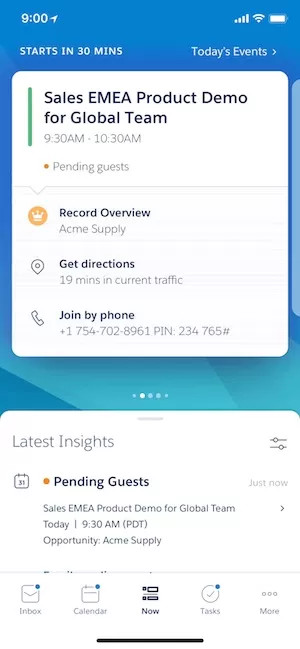
Salesforce Inbox Now gives a smart mobile encounter that surfaces valuable insights and activities that help field sales reps plan, manages, and enhances each snapshot of their hectic work schedule — all without leaving the application. Sales reps will now be able to see crucial customer data, including account information, contacts, and free up their slot for next meeting inside the calendar event, so they can boost their next meeting without expecting to look through old emails physically. Meeting recaps are currently mechanized with prompts, so notes or activity things or follow-up meetings can quickly be caught. Besides, Einstein Insights for each record is presently surfaced immediately, cautioning sales reps to significant occasions, for example, when a key official gets associated with a deal or if pricing is talked about.

Einstein Campaign Insights :

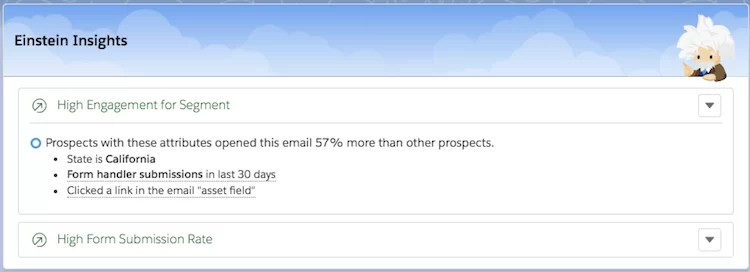
Einstein would now be able to reveal resemblances among possibilities who connect with a specific campaign. This assists reps with distinguishing the profile for the best prospects to target and which campaign resources resound the most. For instance, if managers in IT in the manufacturing business display high commitment with a campaign resource, reps realize that marketing material will resonate with comparative possibilities and comprehend this might be another group of customers to connect with. Even better, marketing groups will quickly have visibility into insights, making adjustments on content needs, and revealing new customers across sales and marketing seamlessly.

Social Intelligence Module :

The Social Intelligence Module presents an AI-powered social media feed concentrated on business-related subjects, directly inside the Sales Cloud. Assemble more trust with customers and prospects by utilizing account-based social listening that gives crucial insights preceding a customer meeting. Sales reps can likewise immediately make a lead through a social post or add a social profile to a current contact record, just as offer social presence on Chatter to advise the rest of the group. The Module, as of now, supports Twitter and top-level news websites, with more channels expected to be included consistently.

You can also now share data & coordinate within groups easily:

Sales Cadences & Work Queues in High Velocity Sales :

High-Velocity Sales changes the route inside sales reps work by controlling them through templatized Sales Cadences that let them know precisely how to connect with another possibility, and Work Queues, a customized rundown of organized assignments to direct them as the day progressed. Presently, numerous Sales Cadences can be connected to address progressively complex sales forms like longer lead times or expanded effort programs. Also, Work Queues would now be able to be altered to show the possible information that is generally significant for your selling methodology — so the most striking data expected to connect are surfaced to inside sales reps consequently.

Quip for Sales :

Modern-day sales cycles usually have more than 6 stakeholders, and now sales reps can train groups of stakeholders through a deal cycle efficiently with Quip for Sales. With Quip for Sales, reports, and spreadsheets currently live right inside records, empowering groups to effectively discover what they require and guarantee they’re working from the most exceptional form. Any group chipping away at the record can now effectively pull up important documents like record plans, official briefings, and quarterly business surveys inside their work process without expecting to open another window or quest for records. Far and away superior — sales groups can templatize winning sales procedures via automating the production of best practice formats that naturally appear nearby any new item, for example, records and opportunities.